
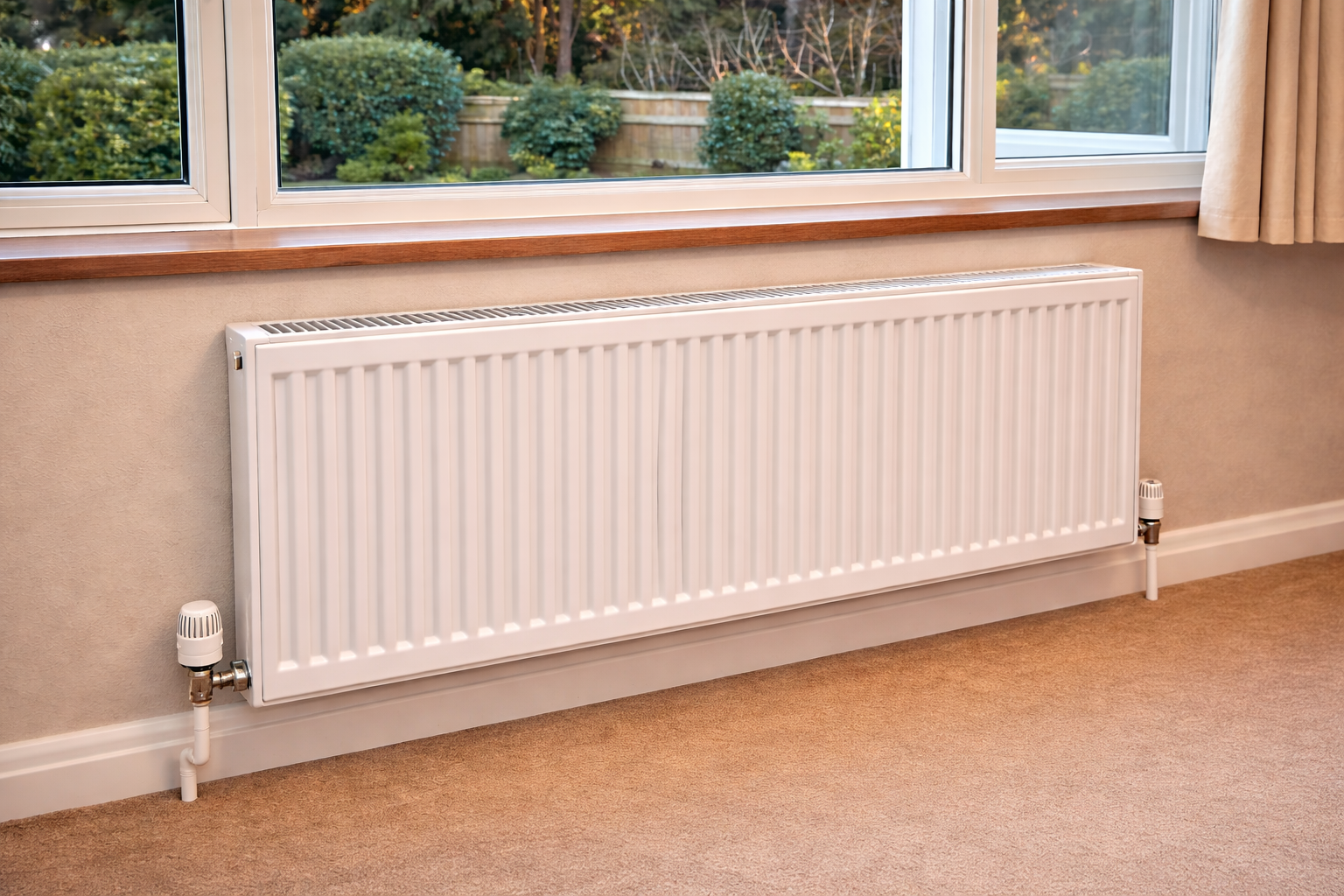
Cold radiators are a common issue many homeowners experience – especially during colder months when your heating is working harder.
The good news is, it’s usually something that can be fixed fairly easily.
Why is my radiator cold at the bottom?
When a radiator is cold at the bottom, the most likely cause is a build-up of sludge inside the system.
Over time, your heating system collects:
- Rust
- Dirt
- Limescale
This settles at the bottom of the radiator, blocking the flow of hot water. As a result, the top heats up, but the bottom stays cold.
Other possible causes:
- Poor system circulation
- A failing pump
- Blocked pipework
However, in most cases – it’s sludge.
Why is my radiator cold at the top?
If your radiator is cold at the top but warm at the bottom, the most common cause is air trapped inside the system.
Over time, small amounts of air can enter your heating system. Because air rises, it collects at the top of your radiators and prevents hot water from filling the entire unit. This is why the bottom heats up normally, while the top stays cold.
Common Causes of Air in Radiators:
- Recent boiler or heating system work
- Low system pressure
- Small leaks allowing air into the system
- Natural build-up over time
Why It Matters
Trapped air reduces the efficiency of your heating system, meaning:
- Rooms take longer to warm up
- Radiators don’t heat evenly
- Your boiler has to work harder, increasing energy costs
The Solution
The good news is this is usually a simple fix – bleeding the radiator will release the trapped air and allow hot water to circulate properly again.
If multiple radiators are affected or the problem keeps returning, it could indicate a deeper issue within the system that may need professional attention.
⚠️ Cold Bottom vs Cold Top – What’s the Difference?
It’s important to diagnose the issue correctly:
- Cold at the bottom → Usually sludge (needs cleaning)
- Cold at the top → Air trapped (needs bleeding)
Many people try bleeding a radiator when the problem is actually sludge – which won’t fix it, but we can!
🔧 How to Bleed a Radiator (Step-by-Step)
If your radiator is cold at the top, bleeding it will release trapped air and restore proper heating.
What you’ll need:
- Radiator key
- Cloth or towel
- Small container (optional)
Step 1: Turn Off Your Heating
Make sure the system is switched off and the radiators have cooled down.
Step 2: Locate the Bleed Valve
This is usually found at the top corner of the radiator.
Step 3: Insert the Radiator Key
Place the key into the valve and slowly turn it anti-clockwise.
Step 4: Release the Air
You’ll hear a hissing sound as air escapes. Keep the cloth underneath to catch any drips.
Step 5: Close the Valve
Once water starts coming out steadily, close the valve by turning it clockwise.
Step 6: Check Boiler Pressure
After bleeding, check your boiler pressure and top it up if needed.
🧼 What If the Bottom Is Still Cold?
If bleeding doesn’t solve the issue, the radiator likely has sludge build-up.
Solutions include:
- Power flushing the system
- Removing and cleaning individual radiators
- Installing a magnetic filter to prevent future build-up
This is usually a job for a professional to ensure it’s done properly.
✅ Final Thoughts
Cold radiators are not just uncomfortable – they also make your heating system less efficient and can increase your energy bills.
- Cold at the top? → Bleed the radiator
- Cold at the bottom? → Likely sludge
If you’re unsure or the problem keeps coming back, it’s best to get it checked professionally.
📞 Need Help?
If your radiators aren’t heating properly, we can diagnose and fix the issue quickly – whether it’s trapped air, sludge or a deeper system problem.